The Role of Lagrangian Drift in the Generation of Surface Waves by Wind
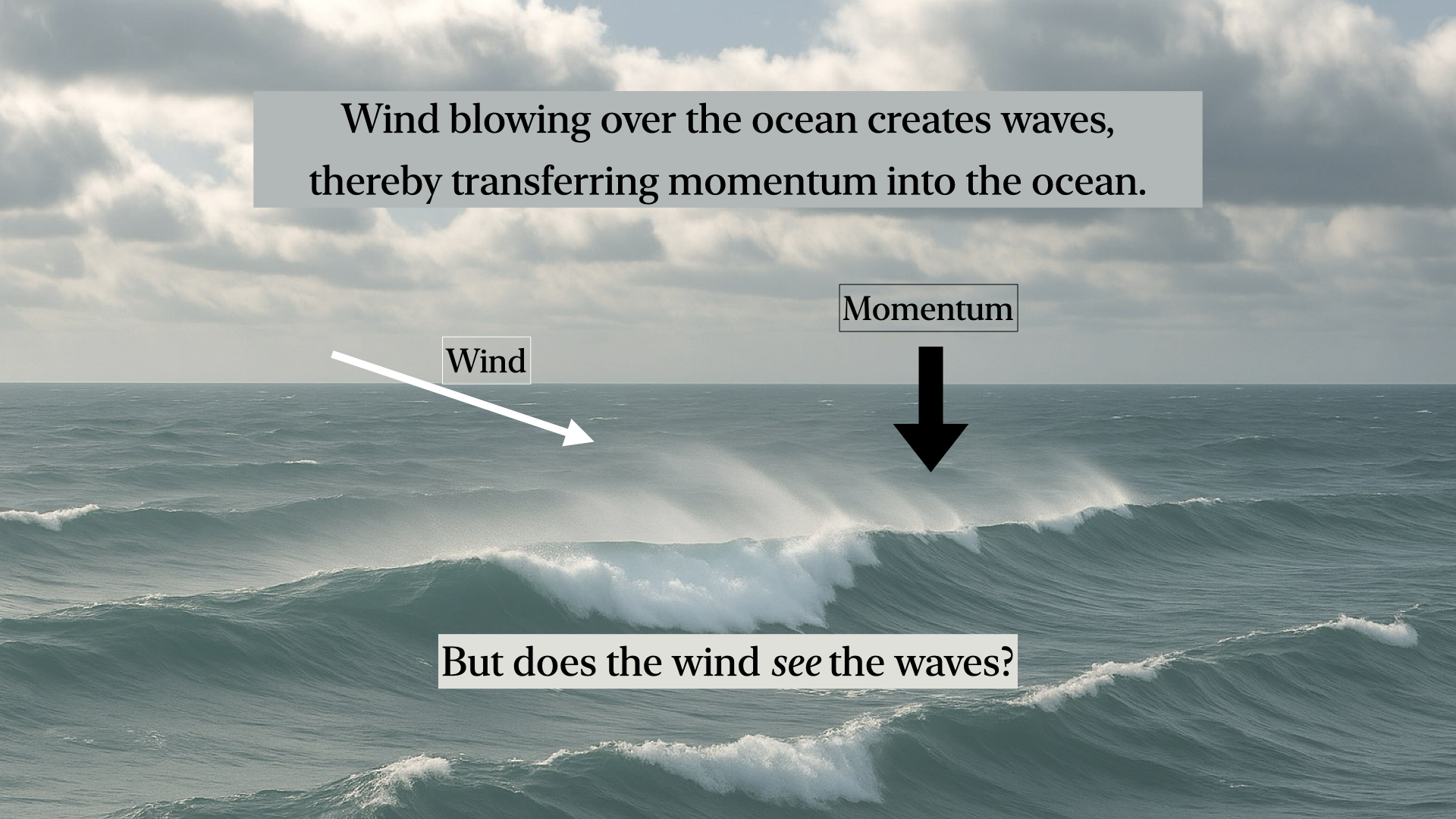
In other words, if there is a pre-existing wave, does that affect the rate of air-sea momentum transfer?
Does the initial perturbation that eventually becomes a wave affect its own further response to the wind?
We answer the key question of whether the wind see the waves in this sense through a nonlinear stability analysis entirely in the Lagrangian frame.
Background
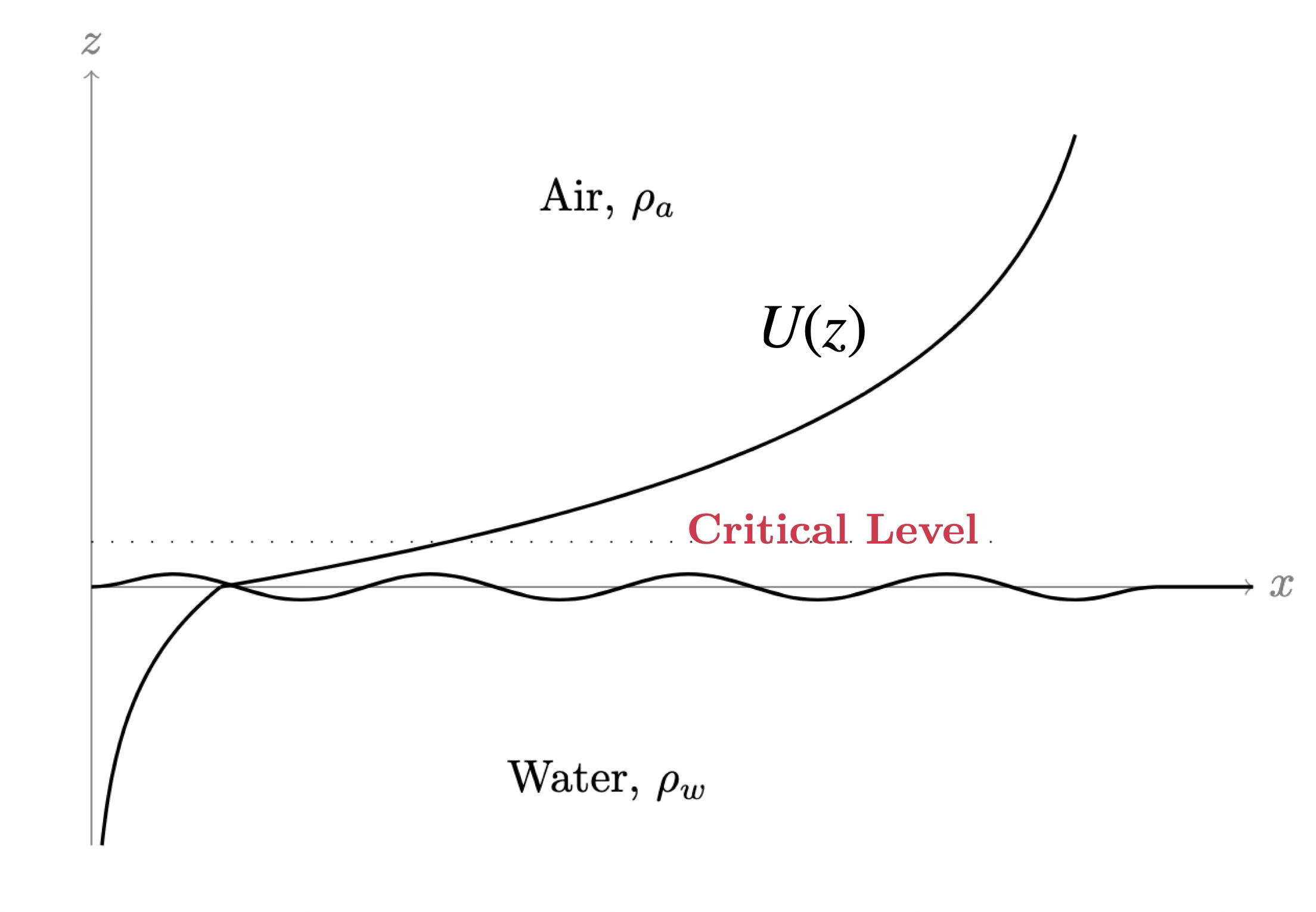
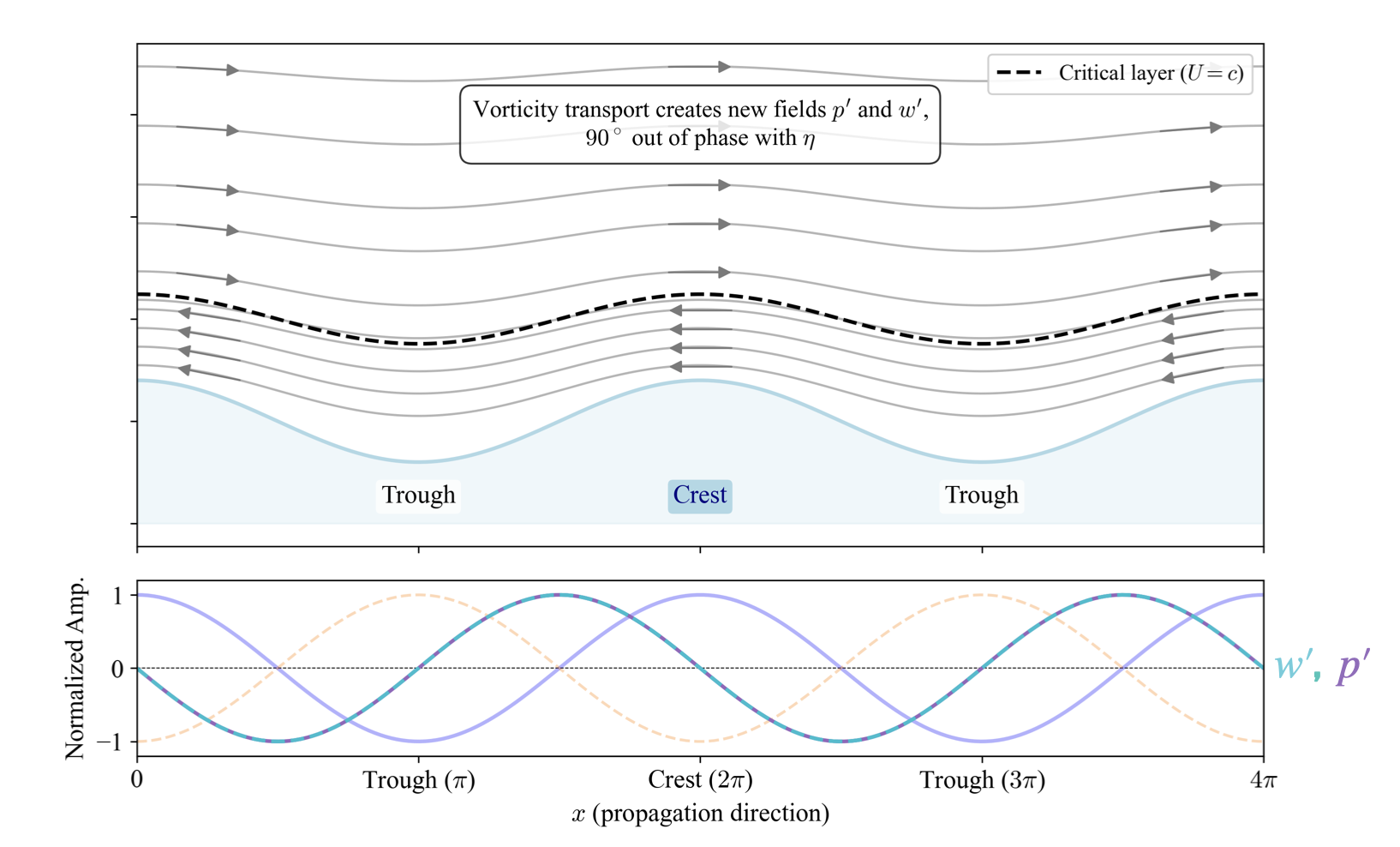
Miles' (1957) original theory for wind-wave generation finds that an instability corresponding to wave growth arises when the phase speed of an initial sinusoidal disturbance matches the background wind velocity at some height.
The physical interpretation behind the mechanism proposed by Miles was given by Lighthill (1962), mainly through a parcel argument. It thus involves the (mean) velocity a parcel actually experiences, the Lagrangian drift.
Overview of Our Work
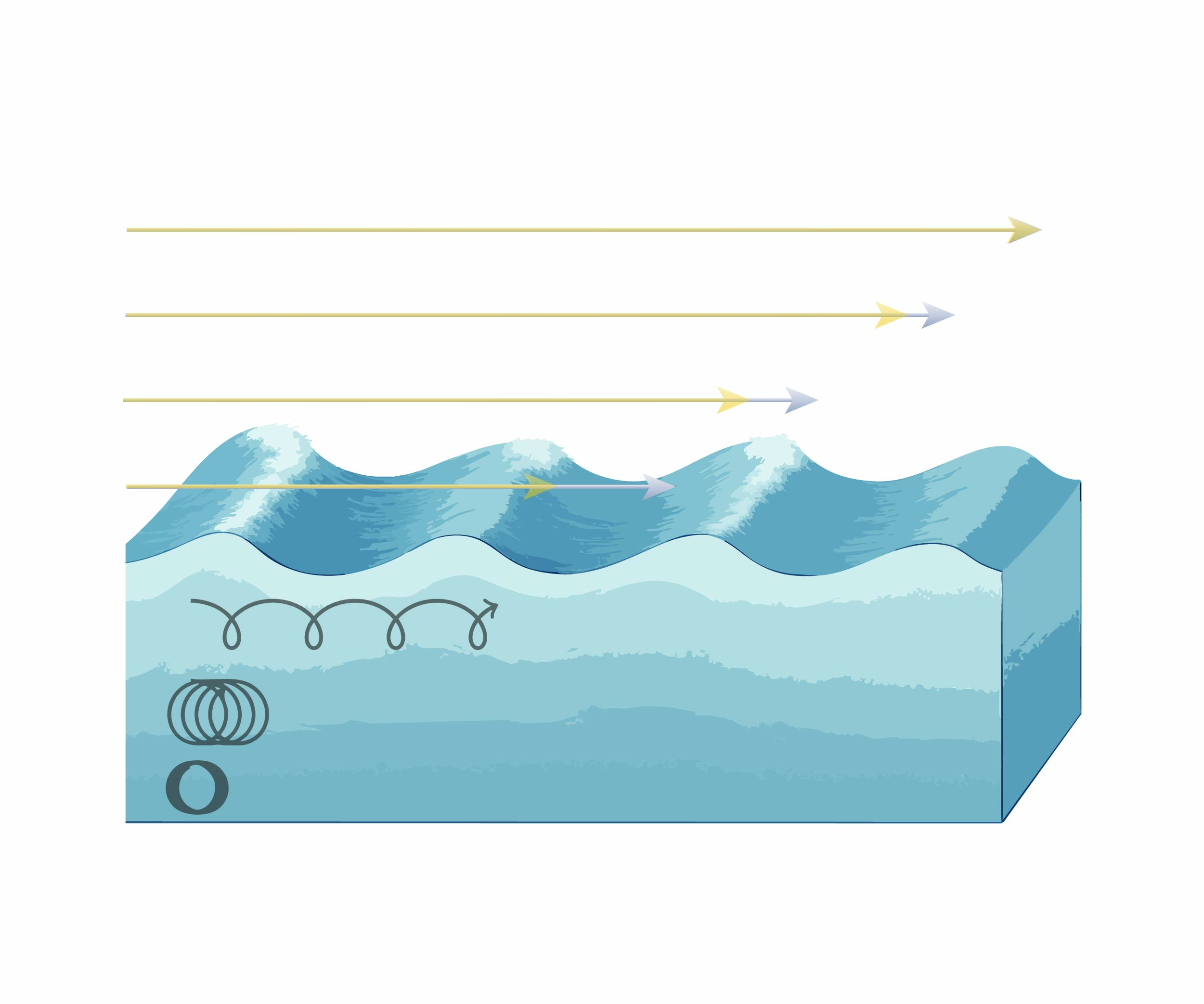
A parcel argument given by Lighthill (1962) is the basis of the physical understanding of the mathematical framework established by Miles (1957); this suggests the actual velocity experienced by a parcel is central to wind-driven wave generation.
Yet, the mean particle (Lagrangian) velocity and the mean Eulerian velocity used in the math differ by the Stokes drift:
This drift scales with the square of wave slope (or amplitude). Thus, Lighthill’s picture aligns with Miles’ math at leading order, but the correspondence breaks down at higher orders.
To address this, we re-derive Miles’ analysis fully in the Lagrangian frame, through third order in the wave slope.
Methods
Results
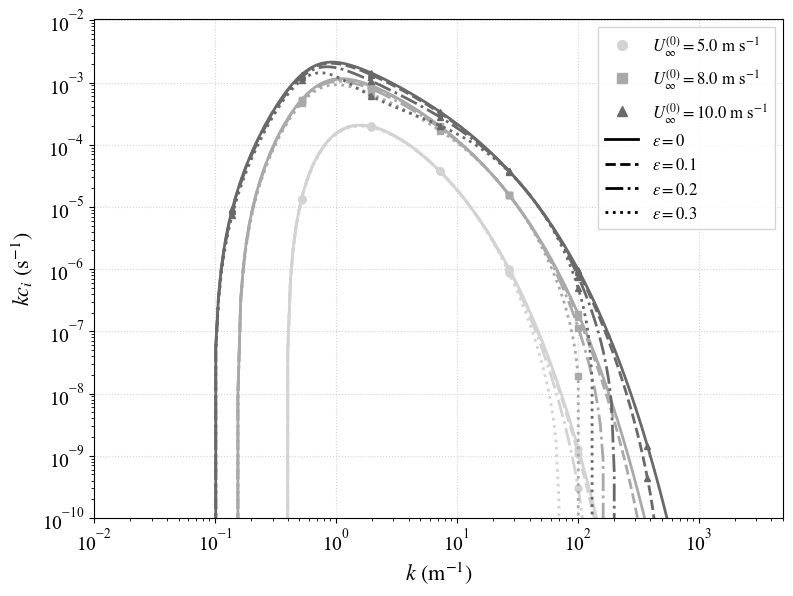
1. The wave-induced mean flow significantly modifies wave growth rates.
The leading-order correction due to the presence of the wave-induced mean flow significantly suppresses growth at high wavenumbers in all cases, but also at intermediate wavenumbers when the background shear and wave steepness are sufficiently large.
In the realistic double exponential background profiles tried, the integrated suppression could be nearly 40%.
2. Momentum budget depends on the Lagrangian mean velocity.
Specifically, the difference $c-U$ modulates the integrated momentum fluxes. Since $c=U$ at leading order but not necessarily higher orders, this supports that a detuning of the resonance due to the wave-induced flow may explain the suppression of wave growth.
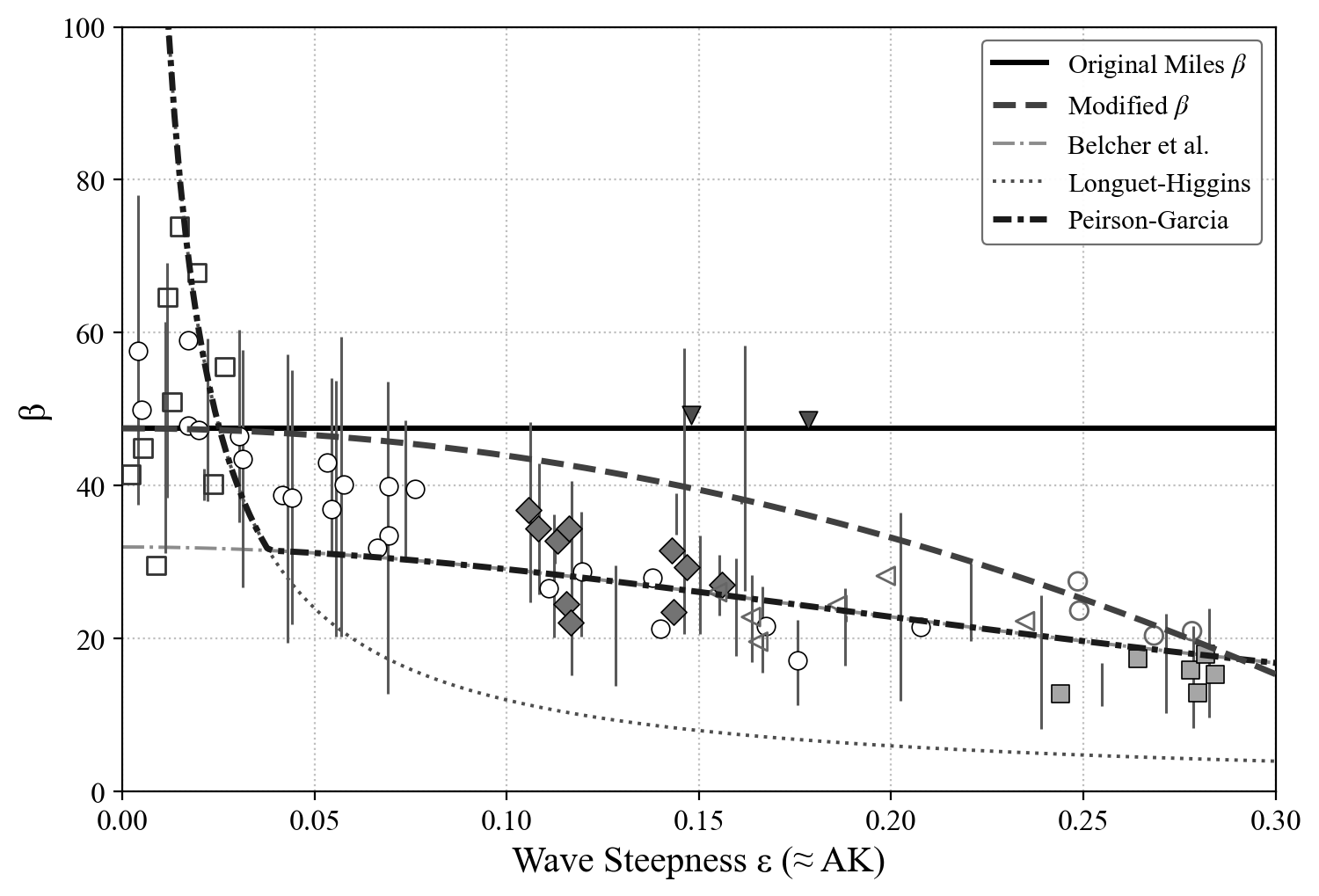
3. The predicted growth rates give a new explanation for experimental findings.
A collection of growth rates from wave tank experiments compiled by Peirson & Garcia (2008) shows a decrease of growth with wave steepness.
When approximated for a logarithmic wind profile, our growth rates align well with those observed: providing a single, mathematical, non-empirical explanation.
Implications & Future Work
arXiv preprint